A House of Disappointment: Katheryn Bigelow’s Lowest Offer Yet
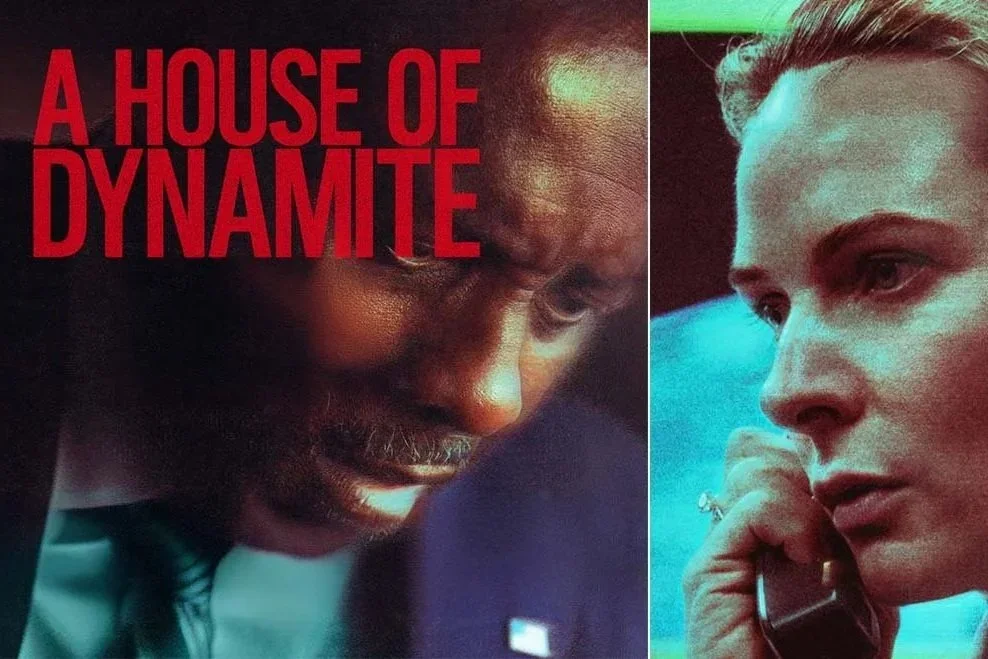
A poster for the release of the new film A House of Dynamite
Within the contents of this article I am going to spoil this film, as I found it to be so aggravatingly disappointing as to have been unworthy of my time or money in seeing. That so, it came from the vision of a director whom I have showered with the highest of respects in the past for her work on Zero Dark Thirty, which I have long considered to be among the best military/political dramas of the modern era, all the more so fueling my distaste for this latest film.
For those unaware of the concept, and plot of A House of Dynamite, it is a thriller/drama — mistakenly quoted as an apocalyptic thriller — aside from the film’s ratings there is nothing apocalytpic about it — chronicling the fictional launch of an ICBM, presumed to be armed with a nuclear warhead, towards the United States from an origin point somewhere in Asia. The film begins with a “real time” chronicle of the event as experienced by Airmen stationed at Greeley Air Force Base in Alaska, a GBI (Ground Based Interceptor) missile silo complex which is a major component of our existing ballistic missile defense infrastructure. We never see the foreign missile itself of course, it appears only as a moving blip on a screen within the various sets. Shortly after the launch, a video call is initiated between Greeley, The White House Situation Room, United States Strategic Command, and the Deputy National Security Advisor.
Somewhere near crossing over Alaska, two GBI’s are released from Greeley in an attempt to down the incoming ICBM. A great deal of suspense is generated in the buildup to the missile interception, which mysteriously, is a total failure. Both GBI’s pass clean by the ICBM, and all havoc breaks out, dragging POTUS into the call. The missile’s target is discovered to be Chicago, which the film says to have an immediate casualty estimate of around 10 million people. That GBI system was operated by Major Daniel Gonzales, who entered a state of complete shock following the failed interception, he is seen smoking a cigarette outside, writhing in horror. Classic.
Focus then effectively shifts over to Washington, and Offut Air Force Base in Nebraska. The leadup to the missile’s impact and the associated chaos among government officials is then depicted, stopping short of the impact. This sequence of events is then rewound, and retold twice, in what appears to be real time, although definitely slowed to generate additional suspense. Secondly from the perspective of General Anthony Brady, director of STRATCOM, and Deputy National Security Advisor Jake Baerington, who is initially running down the street towards the White House during a traffic jam, with airpods in his ears, participating in a call likely to determine the fate of a major American city. Thirdly, that sequence is again retold from the perspective of the President.
In none of those three segments, do we physically see, or learn the ultimate result of, the missile’s impact. The third chapter ends abruptly seconds before the event, and the credits roll. At that moment, while I was viewing the film in a theater in Los Angeles, attended by all of 4 people including myself, the man in front of me exclaimed “what?” Then proceeded to exit the theater.
I can understand Bigelow’s intentions in making this film, wanting to implant in the minds of the audience awareness of the very real possibility of the film’s events taking place in real life. It is a cautionary tale without doubt. But the film fails spectacularly in doing so, by ending in nothingness. How this film was even approved for production is beyond me, as is how Bigelow did not clearly see its one fatal flaw. I am in fact so dumbfounded by this, that I wish I could rag on it in its entirety, but that would be irresponsible, and untrue. Despite a gross lack of character development, or time given to warm them to the audience, understandable given the films narrative structure, it is otherwise decent. Dialogue is well written, the characters at least appear to be realistic, as do the environments in which they function. The cinematography is of predictably normal style for the genre, nothing stuck out about it. But the film’s abrupt end, failing even to elicit speculation among the average viewer, makes any and all of that in vein.
To Katheryn, please try harder next time.